Bon Secours Mercy Health has received Practice Greenhealth’s 2026 System for Change Award, recognizing the ministry’s enterprise-wide approach to environmental sustainability, operational stewardship and resource management across its care delivery network.
Bon Secours Mercy Health has been named a recipient of Practice Greenhealth’s 2026 System for Change Award, recognizing the ministry’s commitment to advancing environmental sustainability through coordinated efforts across its care delivery network.
The award honors health systems that establish organization-wide sustainability goals, measure progress and promote collaboration to drive meaningful environmental improvement.
Bon Secours Mercy Health was among a select group of health systems recognized for implementing sustainability initiatives that support both environmental stewardship and operational excellence. The recognition reflects the ministry’s ongoing efforts to reduce environmental impact while supporting its Mission to improve the health and well-being of the communities it serves.
“Creating healthier communities extends beyond the care we provide in our hospitals and physician practices. Environmental sustainability is closely connected to community health, and this recognition reflects the commitment of associates and leaders across our ministry who are working together to build a healthier future.”
Kelly Stuart, vice president of Ethics
Reducing Environmental Impact Through Innovation
One area of focus has been reducing emissions associated with anesthetic gases used in patient care.
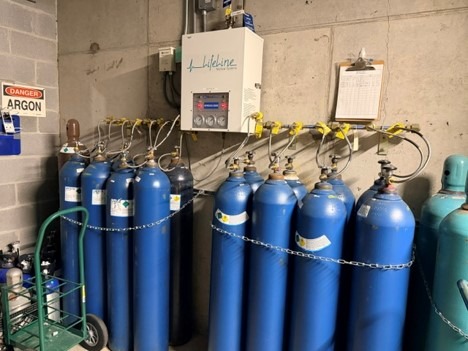
At Mercy Health – St. Anne Hospital in Toledo, Ohio, teams implemented changes to the facility’s nitrous oxide delivery system designed to reduce gas loss while maintaining the highest standards for patient care and safety. Before the improvements, the system lost an estimated 53% of its nitrous oxide through undetectable leaks. In the two years following the transition, those losses were virtually eliminated. According to ministry leaders, the initiative has informed broader sustainability efforts across the organization and builds on Mercy Health’s ongoing work to adopt anesthetic gases with a lower environmental impact while continuing to deliver the same high-quality care.
These initiatives build on ongoing work to evaluate anesthetic practices and identify opportunities to reduce environmental impact while maintaining high-quality care.
Advancing Energy Stewardship Across the Ministry
Bon Secours Mercy Health also continues to invest in projects that improve energy performance across its facilities. Efforts include building optimization initiatives, operational improvements and infrastructure investments that support efficient resource use.
As healthcare increasingly relies on advanced technologies and digital tools, responsible energy management plays an important role in maintaining operational resilience while supporting long-term sustainability goals.
Improving energy efficiency helps the ministry reduce operating costs, strengthen resource stewardship and support reliable energy availability in the communities it serves.
A Collaborative Approach to Sustainability
The System for Change Award recognizes health systems that implement sustainability strategies across their organizations, benchmark progress and share best practices that advance industry improvement.
Bon Secours Mercy Health’s recognition reflects contributions from facility operations teams, clinicians, supply chain leaders, sustainability champions and associates across the ministry.
“Meaningful sustainability progress requires more than individual projects. It requires a shared commitment to stewardship and collaboration. We’re proud of the progress we’ve made and remain focused on identifying new opportunities to reduce our environmental impact while advancing our Mission.”
Miranda Jolliff, director of Waste Stream and Sustainability
This recognition reinforces Bon Secours Mercy Health’s commitment to responsible resource management, environmental sustainability and building healthier communities for future generations.